
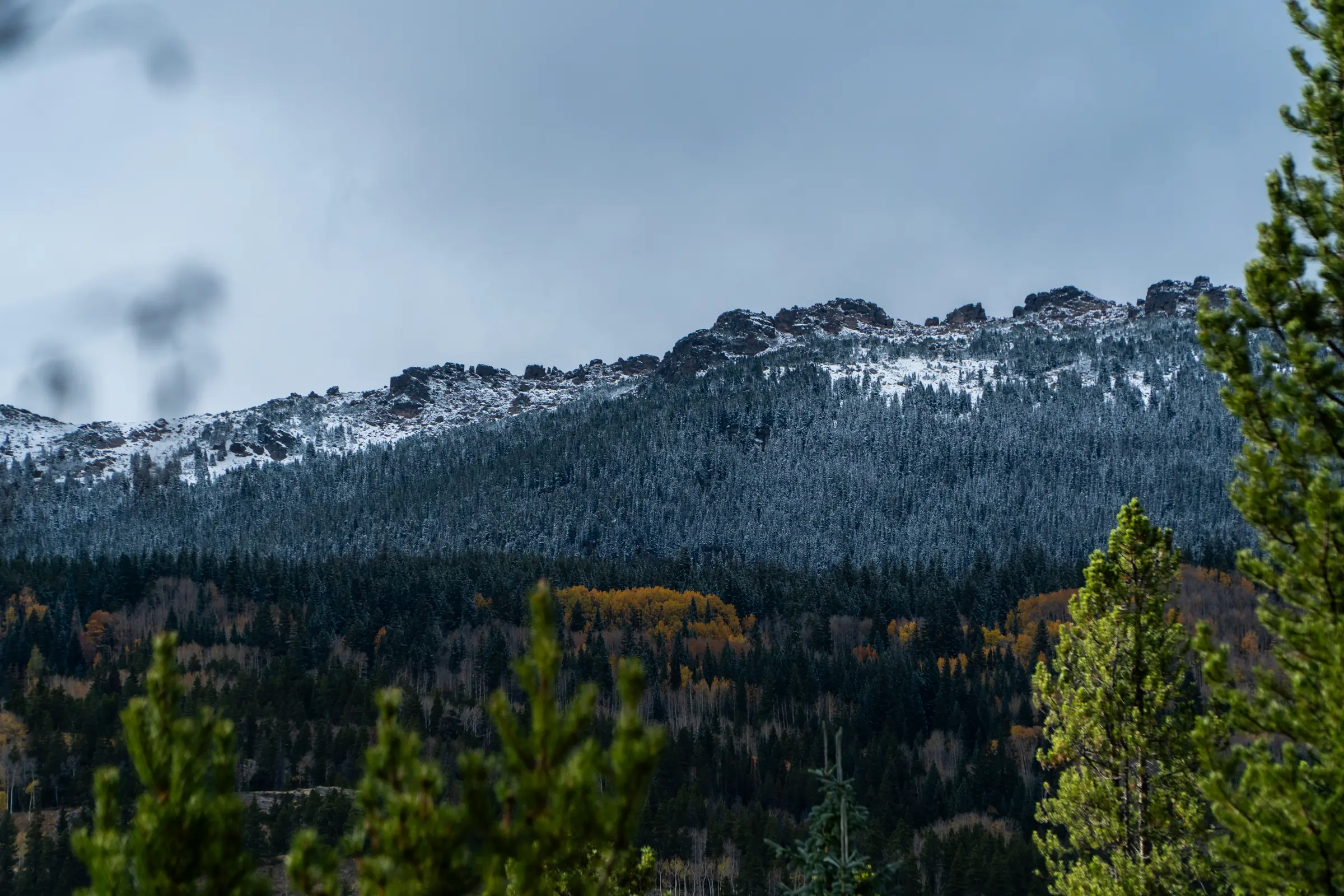
Protect the valley. Stop permanent loss.
Save Homestake calls for Whitney Reservoir to be denied. We also oppose new or expanded because Western Slope water is not a sustainable answer to Front Range growth. We owe our children and future generations intact headwaters, living rivers, and resilient wetlands, not another permanent sacrifice for distant development.
Whitney would destroy an intact fen system built over thousands of years. Before any approval, the cities must disclose the full damage, dependable water yield, and the conservation and less harmful alternatives available instead.
The case in 60 seconds
- Every studied reservoir option destroys the core fen.The same mature fen and river-wetland mosaic lies inside the area each option would flood.
- Growth is not a claim on Western Slope water.A Western Slope-to-Front Range export is to the basin of origin. Once the water crosses the Divide, none returns to Homestake Creek or the Colorado River system as return flow.
- The whole public-land footprint counts.The reservoir, Forest Service roads and access, pumps, power, pipelines, construction, wilderness-boundary questions, recreation, and cultural resources belong in one complete impact record.
- Water rights are not a blank check.Homestake II proves a selected project can be denied when local standards and the evidence support that result.
1. Understand what is proposed
Whitney is a proposed lower-Homestake reservoir and collection concept with pumping to the existing Homestake Reservoir. The utilities’ 2022 factsheet describes several storage sizes and collection from nearby creeks. A July 28, 2026 status report said the cities had not selected a final configuration. Utilities’ factsheet · July 2026 reporting
Whitney crosses Aurora’s parcel and the surrounding White River National Forest through its reservoir, roads, access, and related infrastructure. Homestake Creek, groundwater, wetlands, wildlife movement, recreation, and the cultural landscape continue across property lines. The cities have not published final facility routes or affected-acre totals. 2019 project application · Forest Service feasibility approval
Whitney follows the defeated Homestake II expansion as another proposal to increase Front Range storage and diversions from the Homestake system. Colorado Springs’ Otero agreement record
2. A water right is not a construction permit
A 1961 court decision recognized a September 22, 1952 priority for the integrated Homestake plan. Any new dam or diversion must still comply with its current decrees and obtain applicable land-use and environmental approvals. Colorado Supreme Court’s historical priority decision · Colorado Supreme Court’s Homestake diligence decision
In 1994, the Colorado Court of Appeals reinstated Eagle County’s Homestake II denial on evidence supporting wetlands and nuisance findings. That decision remains powerful precedent for applying wetlands, nuisance, and other applicable county criteria supported by competent evidence. Homestake II decision
3. Eagle County approval is an independent gate
The Board of County Commissioners, not the planning commissions, is Eagle County's . A water right or another agency approval does not replace the required County 1041 authorization. Under the Chapter VI rules in force today, the applicant bears the burden of proving compliance with every applicable criterion. Conditions work only when the Board finds that they ensure compliance. If the Board cannot make the required compliance finding, the permit must be denied. Current Chapter VI, §§6.01.04-.07, 6.03.10 and 6.04 · Official 2026 C.R.S. §24-65.1-501
The strongest current grounds for denying Whitney
- §6.04.01(17), wetlands and riparian areas. This is the clearest ground because every studied reservoir footprint destroys the same core fen. A construction condition cannot preserve a fen placed beneath a reservoir.
- §6.04.01(24), County benefit versus local loss. Benefits to Eagle County and its citizens must outweigh losses of natural and recreational resources within the County. Whitney's principal supply benefit is for Aurora and Colorado Springs while the permanent losses occur here.
- §6.04.02(3), demonstrated necessity. The cities must prove Whitney is necessary to meet reasonable development and population demands in the service area. The required alternatives, demand, and efficiency record must test whether conservation, reuse, system improvements, and demand limits can meet the need.
- §§6.04.01(11), (18), and (21), recreation, wildlife, and nuisance. Flooded habitat, fragmented movement routes, closures, traffic, noise, dust, vibration, and artificial light matter because each can defeat the required compliance finding.
- §6.04.02(1), efficient water use. Conservation, recycling, and reuse are substantive requirements, not optional context.
Homestake II confirms that competent wetland and nuisance evidence can support denial of a particular project design without extinguishing the cities' underlying water rights. Homestake II decision
The September 15 replacement is proposed, not controlling law. The joint Planning Commission recommendation hearing is September 23, the Board adoption hearing is October 27, and the broader ECLUR adoption hearing is November 3. Staff recommends keeping current Chapter VI fully effective until the replacement and re-adopted ECLUR take effect together; no effective date is yet established. Official schedule and amendment materials · September 23 staff report
If the September 15 proposal takes effect
Section 104 keeps the Board as Permit Authority. For a permit application before the Board, §§211 and 401 preserve the applicant's burden and require denial if any one Article 4 standard fails. Section 109 brings every required support facility and direct, indirect, and cumulative impact into the project, and protects waterbodies whether or not they are federally jurisdictional. Sections 307 and 406 make fen hydrology, wetland function, groundwater, hydrographs, downstream effects, and watershed health the strongest future grounds. Section 409 requires dependable-supply evidence relevant to dry-year yield and refill. Sections 411-412, 423-424, 429, 431, and 434(D) protect habitat, plants, recreation, historic and archaeological resources, property use and enjoyment, visual quality, and efficient water use.
The September draft also removes standalone approval standards equivalent to current demonstrated necessity §6.04.02(3), County-benefit/resource-loss §6.04.01(24), and the July draft's full alternatives and least-adverse-project tests; §434(D) also drops conservation from the substantive standard. Save Homestake asks the County to restore those protections, name fens and fen-supporting groundwater in §406, and preserve Article 4 standards and public participation in every discretionary no-significant-impact decision and County-created ECLUR substitute process. September 15 proposed regulations · July 10 comparison draft, §§331 and 434
4. Every studied reservoir option destroys the core fen complex
Our field mapping places mature fen wetland and river channel across more than 80 percent of Aurora’s valley-floor parcel. All four documented Whitney reservoir options would flood and destroy the photographed fen complex. Reporting on the four alternatives and wetlands they would inundate · Federal wetland-effects standard
The living fen system continues beyond the parcel through its creek, groundwater, wetlands, wildlife habitat, National Forest lands, and downstream waters. Any impact analysis must follow those connections across parcel lines and downstream.
Fens depend on groundwater, perennial saturation, water chemistry, structure, vegetation, and surrounding hydrology. The EPA says natural fen formation can require up to 10,000 years. A replacement wetland should not be treated as equivalent simply because it occupies the same area or supports growing plants. EPA explanation of fens · Forest Service fen ecology
Colorado research found peat physical properties still unrestored after 20 years. Whitney would destroy an intact fen whose hydrology and peat structure developed over thousands of years. Chimner and Cooper research summary
Functional replacement requires durable groundwater, peat, habitat, and drought performance over time, with failure risk and uncompensated-loss duration disclosed. Federal mitigation rules expressly recognize fens as difficult to replace. No mitigation site can preserve the original peat body, hydrology, ecological relationships, and place Whitney would destroy. Federal compensatory-mitigation rule
The creek below the dam matters, too.
Damming the creek and taking water out would change downstream flows. The cities must show how altered flows would affect fish, streamside habitat, and connected wetlands. Federal requirements for project-caused and downstream effects
Led by Eagle River Coalition and Wilderness Workshop, the Homestake Valley BioBlitz is building a public record of the plants, animals, insects, fungi, and wetland life found across the valley. The annual field day returns each summer, and anyone can add observations to the iNaturalist project year-round. Explore the BioBlitz and join in
5. Climate risk, Shoshone, and dependable water
Shoshone's near Glenwood Springs date to 1902 and 1929, before the principal Homestake priority. Homestake Creek feeds the Eagle River, which reaches the Colorado upstream of Shoshone. An enforceable senior call can constrain affected junior upstream diversions, subject to actual administration and applicable agreements. The water returns to the river after power generation. Colorado River District's Shoshone explanation
The effort to preserve Shoshone’s protection through an additional instream-flow use is significant. State-board acceptance and a water-court application occurred in November 2025; the transaction and final decree remain pending. Whitney’s proposed operations must honor senior rights, including call arrangements and legally available refill opportunities. Official application announcement
Colorado’s climate assessment identifies mid-century scenarios with lower spring snowpack, lower annual streamflow, earlier runoff, and higher evaporative demand. Those findings make historical-average supply an inadequate forecast and deepen the risk of relying on a new interbasin diversion for future growth. Require current demand assumptions, climate-stressed sequences, consecutive dry years, evaporation, conveyance losses, and system constraints, and compare all alternatives on the same dependable-delivery measure. An increasingly variable headwaters supply cannot justify permanent Western Slope loss. Colorado’s climate and water assessment
6. Could the valley become an exposed reservoir bed?
How low would the reservoir get in dry years, and how long would the lakebed stay exposed? The cities need to show their operating plans. Falling water would not bring the original fen back. Project operating concept
They should publish water levels, pumping cycles, drought scenarios, exposed-lakebed maps, refill frequency, groundwater effects, and realistic delivered water so the public can test every claimed benefit and risk. Fen ecology
7. Wildlife deserves a documented place in the decision
Our four cameras keep recording wildlife on Homestake's valley floor. Each camera is in habitat that at least one studied Whitney reservoir option would flood; the option varies by site. Exact camera locations remain protected. Explore the Photos & Films archive
Valley Floor 1 documents repeated moose use of a creek-parallel movement route across seasons. That living record supports a noncompliance finding under current §6.04.01(18), the wildlife-habitat criterion. Current §6.04.01(18)
A trail-camera image of a Canada lynx demands current habitat mapping and required federal consultation. The record should also assess downstream aquatic habitat, seasonal flows, temperature, and project-specific depletions. Federal species-consultation framework
8. Whitney's full public-land footprint must count
The utilities’ published concept includes pumping but does not specify motor sizes, electricity routes, line voltages, standby generators, operating hours, or noise levels. Those details must be disclosed and assessed before any permit decision because the industrial disturbance would extend far beyond the flood line. Utilities’ project description
The 2019 project application identifies Forest Road 703 as access to Gold Park Campground, Holy Cross Wilderness trailheads, Homestake Reservoir, and fishing and recreation along Homestake Creek. Separate 2019 reporting said reservoir concepts would flood portions of Homestake Road. As of July 2026, no final road-realignment plan had been selected. Any replacement or relocation, construction access, closures, traffic, and resulting habitat and recreation effects are part of Whitney, not secondary details. 2019 project application · Road and wilderness reporting · July 2026 status
The cities must disclose every necessary pump, power line, pipeline, tunnel, access road, construction area, and operating rule. Sound measurements, lighting plans, traffic and closure schedules, and groundwater analysis must show how habitat, scenery, recreation, safety, and public access would change. Current §§6.03.06 and 6.04.01
9. Protect Holy Cross Wilderness and the living history around it
2019 planning materials contemplated removing up to 497 acres from Holy Cross Wilderness to accommodate Whitney-related infrastructure. While no boundary change has been enacted, it remains a likely component of any future Whitney Reservoir plan given the infrastructure needs and would require an act of Congress. 2019 wilderness-boundary reporting
Subtracting protected land from Holy Cross Wilderness to enable a new interbasin diversion would cross a profound public-policy line. Every facility, road, and affected acre must be mapped against the statutory boundary. Colorado Wilderness Act
Homestake Valley lies within Ute homeland and the former Camp Hale training landscape. Flooding, excavation, road work, and altered setting could erase physical evidence and the landscape context that carries that history forward. The Army Corps identifies a Homestake Valley Range Complex, and the proponents’ 2019 application warns that unexploded ordnance may remain. Any Whitney approval must include government-to-government Tribal consultation and a complete Section 106 cultural-resources process. Army Corps Camp Hale record · 2019 project application · Camp Hale proclamation
Save Homestake will document public-road and recreation conditions while protecting sensitive sites and removing location metadata. Agencies must complete cultural-resource surveys, archival work, and Tribal consultation before deciding whether Whitney may proceed. Do not approach suspicious objects or publish sensitive coordinates. Section 106 regulations
10. Front Range growth does not justify another interbasin diversion
Save Homestake rejects new or expanded interbasin diversions as the answer to Front Range growth. Western Slope rivers, wetlands, and headwaters are not an endlessly expandable supply. Conservation, outdoor-demand management, reuse, existing-system improvements, and growth within durable water limits must take priority over sacrificing Homestake Valley. The applicant bears the burden to demonstrate need and address required alternatives. Compare relevant practicable options on legal availability, timing, cost, reliability, and impacts. Aurora has itself described reuse and aquifer-storage efforts. Aurora Water’s Senate testimony
Not every water use permanently removes every diverted drop. Return flows can re-enter the same river or connected groundwater and support downstream communities, wetlands, fish, wildlife, and other users again. Whitney’s export would be different. It would be to the basin of origin: once Homestake water crosses the Continental Divide, none returns to Homestake Creek or the Colorado River system. The loss continues downstream through the watershed that produced the water. Colorado Basin Roundtable’s transbasin definition · Colorado State University on consumptive use and return flow
The Colorado River District’s April 2023 transmountain-diversion policy states that the district sees no current or reasonably foreseeable need for new projects. It identifies conservation, reuse, better groundwater management, system connections, native-flow storage, and in-basin transfers or exchanges as ways to meet Front Range demand. Colorado River District policies
Agricultural water accounting must distinguish gross diversions from consumptive use because return flows support other users and ecosystems. Any efficiency alternative must identify legally available savings without shifting harm to another community. Compare cost per dependable additional acre-foot and distinguish storage volume, average yield, emergency reserve, and drought delivery. Research on irrigation conservation and water use
11. Use the protections that actually apply
Every Whitney component must satisfy each applicable state, federal, and county protection, including Colorado's and Clean Water Act permitting where federal jurisdiction exists. Colorado Regulation 87 · Federal discharge restrictions
Federal land authorization and NEPA analysis must account for Whitney’s connected facilities and effects. Supreme Court’s Seven County decision · Forest Service special-use requirements
12. A living river deserves enforceable protection
Homestake Creek deserves lasting protection. Colorado's program allows purchases, leases, loans, and donations of existing water rights. Required approvals make each acquisition enforceable while protecting other rights. CWCB's instream-flow acquisition program
Save Homestake supports both immediate use of existing water-right protections and long-term river-rights reform.
What the cities need to answer
Show the full damage. Explain the need. Compare less harmful options. Homestake deserves more than promises while the valley bears the loss.
Our purpose is to make every impact visible and organize opposition for denial, even if the design changes.
Ready to act on the record? Move from evidence to organizing on the Take Action page.
Published sources checked September 17, 2026. Field record updated September 12, 2026. This is a living public record. Material corrections will be dated and explained.